

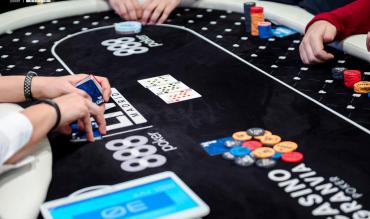

The cutoff (CO) is the second-most profitable seat in poker, and one of the most nuanced to play well. If you need a refresher on where the CO sits and why it matters, see the cutoff position guide. This article covers strategy: when to raise, when to defend, and how to adjust based on the variables in front of you.
Strategic Outlook in the CO
The most profitable CO scenario is when the action folds around to you preflop. This is your primary opportunity to open raise (referred to as a steal attempt) with the goal of taking down the blinds uncontested. A typical CO open range covers around 27% of holdings. Raise aggressively when folded to, but stay within range: going significantly wider gives competent players on the button or in the blinds an exploitable edge.
When facing an open raise from an earlier position, the CO has two options beyond folding: cold call or 3bet. Both carry extra risk compared to the button, because the players still to act (BTN, SB, BB) can squeeze cold calls or cold 4bet 3bets. Play these spots selectively.
- Recommended raise-first-in (RFI) frequency: ~27%
- Recommended cold call frequency: ~8%
- Recommended 3bet frequency: ~7%
These figures assume a range of open sizings. Adjust accordingly (see Relevant Adjustments below).
Sample Ranges from the Cutoff
The following ranges are based on a 100bb NLHE cash game. Memorising exact combinations is less important than developing a solid feel for how wide to go in each spot.
CO Defence vs Hijack Open
Purple: Re-raise (3bet) range
Blue: Cold calling range
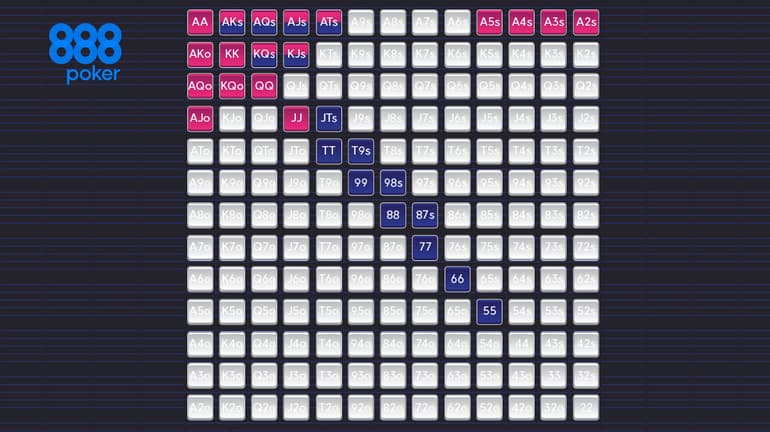
This range is built against a HJ 3bb open. The 3bet range is weighted heavily towards high-equity holdings. In most games, 3bet bluffing speculative hands is not incentivised, because players are not folding to 3bets at the frequency that would make it profitable.
CO Defence vs Lojack Open
Purple: Re-raise (3bet) range
Blue: Cold calling range
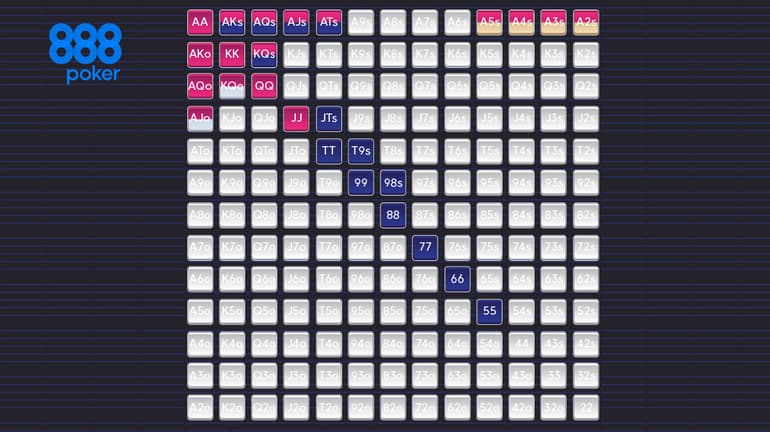
The LJ opening range is stronger on average than the HJ opening range, so the CO defends tighter here. The strategic framework is the same; the range simply shifts inward to account for the increased strength of the threat.
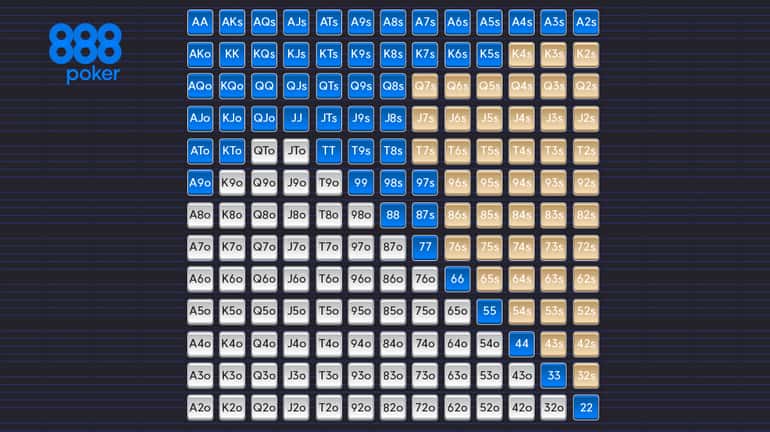
CO Raise-First-In Range
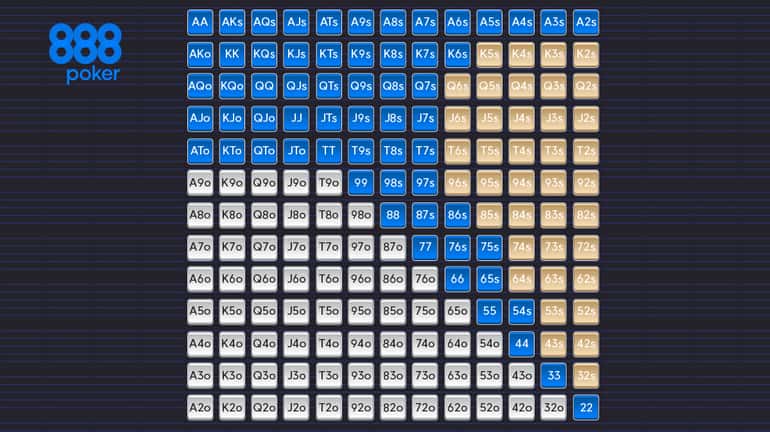
This range covers approximately 27% of holdings. Against weaker players or consistent folders in the blinds, some players profitably extend to around 40%, but that is an exploitative adjustment, not a default.
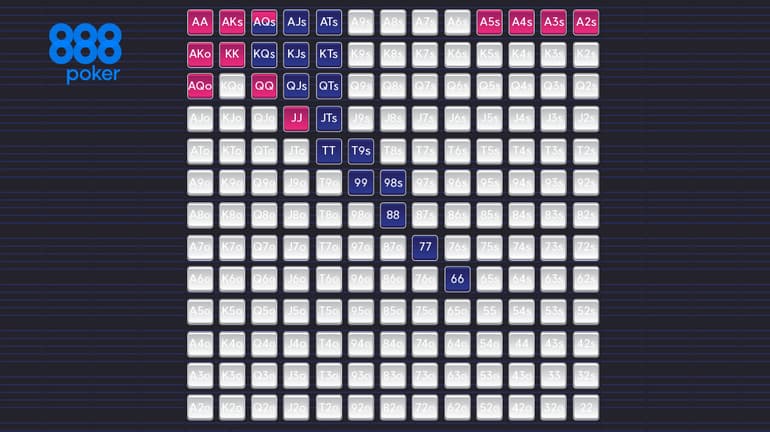
CO vs Blinds 3bet
Blue: Call vs 3bet
Purple: Re-raise (4bet) vs 3bet
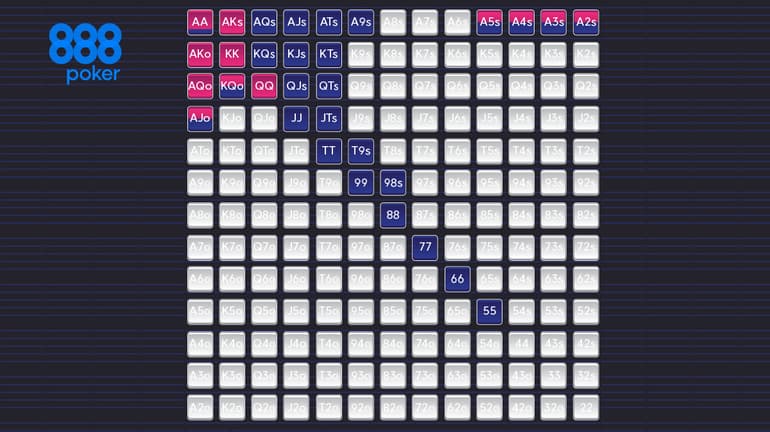
The 4bet range stays tight: high-equity hands only. 4bet bluffing is not profitable in most environments because opponents are not folding to 4bets at the required frequency. When the 3bet comes from the BTN rather than the blinds, tighten the response range further – the BTN has positional equity postflop that the blinds do not.
Blue: Call vs 3bet
Purple: Re-raise (4bet) vs 3bet
Relevant Adjustments
The sample ranges above are baselines, not fixed rules. In practice, several variables should shift your defence and aggression frequencies:
- Villain's sizing – The larger the open raise or 3bet, the tighter you defend.
- Position – The later your opponent's position, the wider you can defend against them.
- Reads – If your opponent folds too often to 3bets, increase your 3bet frequency against them.
- Villain skill – Against weaker players, playing more hands is generally correct.
- Blind tendencies – If the blinds fold too frequently, widen your RFI range beyond the 27% default.
- BTN/blind squeeze frequency – If the players behind rarely squeeze, cold calling more hands in the CO becomes viable.
Other Scenarios
Iso-Raising
An iso-raise is a preflop raise made against a limper. When facing an open-limp, the CO is a strong seat to iso-raise from – you will typically be in position postflop, which amplifies the value of the raise. Raise aggressively here, though slightly tighter than your raise-first-in range.
Overcalling and Squeezing
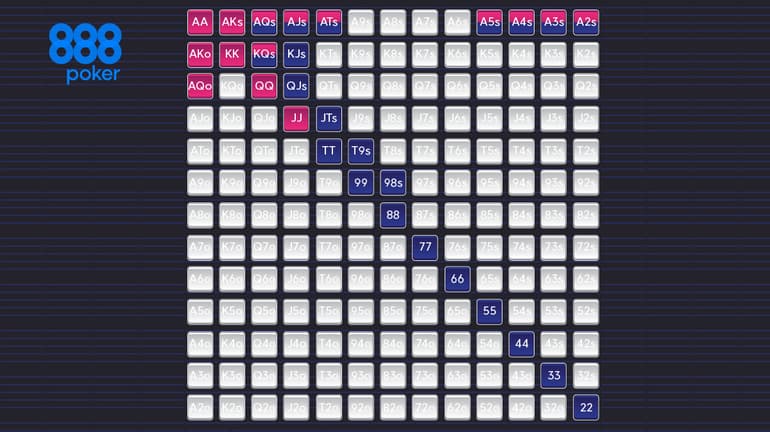
In three-way scenarios (an open raise plus at least one caller) the CO has two options: squeeze (3bet) or overcall. Squeeze with a tighter range than you would heads-up, and weight overcalls towards speculative hands with suited and connected potential.
- Overcall – a call made after another player has already called on the current street.
- Squeeze – a 3bet made after at least one caller has entered the pot against an open raise.
The range below shows CO squeezing and overcalling against a LJ open with a HJ call – the only squeeze scenario available from the CO on a short-handed table.
Purple: Re-raise (squeeze) range
Blue: Overcalling range
Key Takeaways
- The CO's primary edge comes from raise-first-in: open around 27% of holdings when folded to.
- Cold calls and 3bets against earlier-position opens are a smaller part of CO strategy than on the button. The squeeze risk from players behind is real.
- 3bet and 4bet ranges from the CO stay weighted towards high-equity hands; bluffing these lines is not profitable in most games.
- Defend tighter against LJ opens than HJ opens. The LJ range is stronger on average.
- When the BTN 3bets, respond with a tighter range than you would against the blinds.
- All frequencies are baselines. Adjust based on sizing, position, reads, and opponent tendencies.
- Iso-raise aggressively when facing limpers – position postflop makes the CO an excellent iso seat.
- In multiway pots, tighten squeezes and weight overcalls towards suited and connected holdings.
